Attar vs Perfume: Which Format Should You Choose?
Traditional attar and modern spray perfume differ in how they are made and applied, but the label—not the format name alone—should guide your choice.
Oudrix Editorial · · 5 min read
The short answer: choose a traditional attar if you enjoy a concentrated oil format that is dabbed in small amounts and sits close to the application area. Choose a spray perfume if you prefer quick, even application and a scent cloud from an atomiser. Neither is automatically stronger, safer or longer-lasting. Read the actual product label because modern products sold as attar, perfume oil, parfum, EDP or EDT do not all follow one universal formula.
What is the real difference between attar and perfume?
Traditional Indian attar, also written ittar, is made by hydro-distilling aromatic material and capturing it in a base such as sandalwood oil. Government sources on Kannauj describe the region's attar tradition and its deg-bhapka or hydro-distillation process. That heritage definition is more specific than simply calling every roll-on fragrance an attar.
Perfume is the broader word. In everyday shopping it often means a liquid fragrance in a spray bottle, commonly using alcohol as part of the formula, but the word itself does not prove the exact solvent or concentration. Check the ingredient declaration, applicator and directions instead of assuming that every spray contains the same percentage or that every small vial is traditional attar.
Compare the experience, not just the names
Application is the clearest practical difference. An attar with a dabber or roll-on is placed on a small area, so it can suit someone who prefers precise application. A spray perfume distributes fine droplets over a wider area and is convenient when getting ready quickly. Follow the labelled directions and avoid eyes, broken skin and uses the manufacturer has not approved.
Projection and longevity depend on the complete formula, amount applied, skin, weather and scent materials. Oil format does not guarantee all-day performance, and an alcohol-based spray does not guarantee louder projection. Test the exact product over time rather than buying on a fixed-hours promise. The perfume testing guide gives a simple paper-and-skin comparison method.
For value, compare how you will use the bottle. A small attar may be applied drop by drop, while a spray perfume may be used more generously. Price per millilitre alone can therefore be misleading. Compare price per comfortable wear, the quantity you actually apply, packaging convenience and whether the seller provides clear ingredients, warnings and support.
A decision guide for common situations
For a shared office or classroom, either format can work when applied considerately. A dabbed oil may make precise application easier, while one or two cautious sprays may be simpler for someone already familiar with that bottle. The considerate amount matters more than the format label.
For travel, choose packaging that closes securely and check the current carrier and airport rules before packing. Do not assume a tiny attar bottle is exempt from security or leakage concerns. If you are flying, use the separate perfume flight guide.
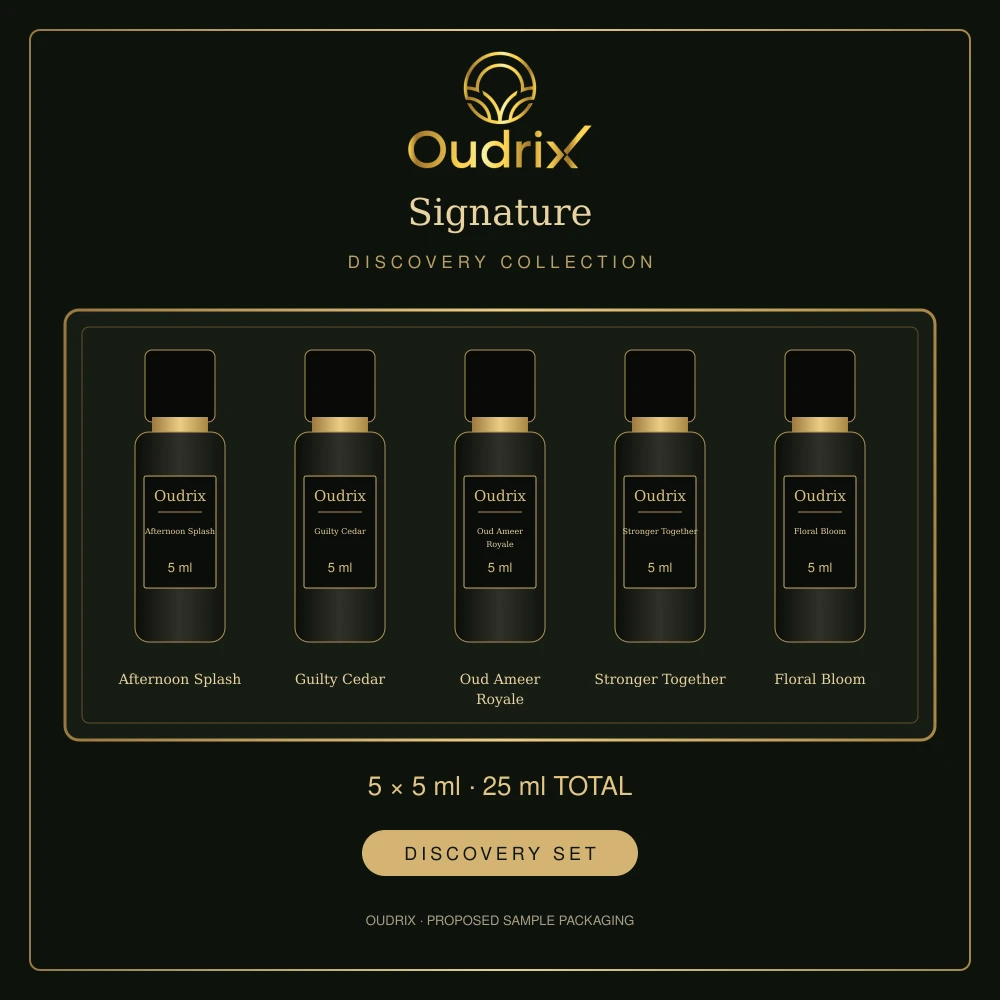
For a first blind purchase, avoid deciding only from words such as oud, rose or musk. Try the actual scent if possible and observe the opening and later impression. If you want to compare modern spray perfumes in small named samples, Oudrix Discovery Sets provide that route; they are perfumes and are not presented as traditional attars.
For a gift, confirm which applicator the recipient prefers. Someone accustomed to roll-ons may not want a large atomiser, and someone who sprays fragrance on the go may find a dabber unfamiliar. The perfume gifting guide helps compare sample and full-bottle formats.
Check these five things before buying
1. Product identity: does the listing say traditional attar, perfume oil, EDP, EDT or simply perfume?
2. Ingredients and base: do not treat alcohol-free, natural or sandalwood-based as automatic facts unless the label or maker states them.
3. Intended use: confirm whether it is for skin and how the manufacturer says to apply it.
4. Net quantity and applicator: compare a 6 ml dabber with a 50 ml spray by routine, not size alone.
5. Safety information: IFRA explains that fragrance-material limits depend on the intended finished-product use. Natural materials can also contain restricted constituents, so natural does not mean restriction-free. Follow local rules and the final product directions.
Frequently asked questions
## Is attar always alcohol-free? Traditional attar is an oil-based distillation, but shopping labels are not perfectly consistent. Verify the ingredient declaration or ask the manufacturer about the exact product instead of relying on the word attar alone.
Does attar last longer than perfume?
Not necessarily. Longevity varies by formula, materials, dose, skin and conditions. Compare the exact products on your own skin according to their directions.
Is attar safer for sensitive skin?
No format is automatically suitable for sensitive skin. Oil-based and natural fragrance materials can still cause irritation or sensitisation. Follow the label, stop use if irritation occurs and seek medical advice for a persistent or serious reaction.
Can I layer attar and spray perfume?
Only when both products are labelled for the intended use. Start with very small amounts, test the combination first and avoid irritated skin. More fragrance is not automatically a better result.
Find your own fragrance story
Explore fragrance families and discover a profile you enjoy.
Find your scent → Explore fragrances