
How to Patch Test Crystal Deodorant Before Regular Use
A cautious small-area use check may reveal obvious irritation before regular use, but it is not the same as medical patch testing and cannot guarantee suitability.
Oudrix Editorial · · 5 min read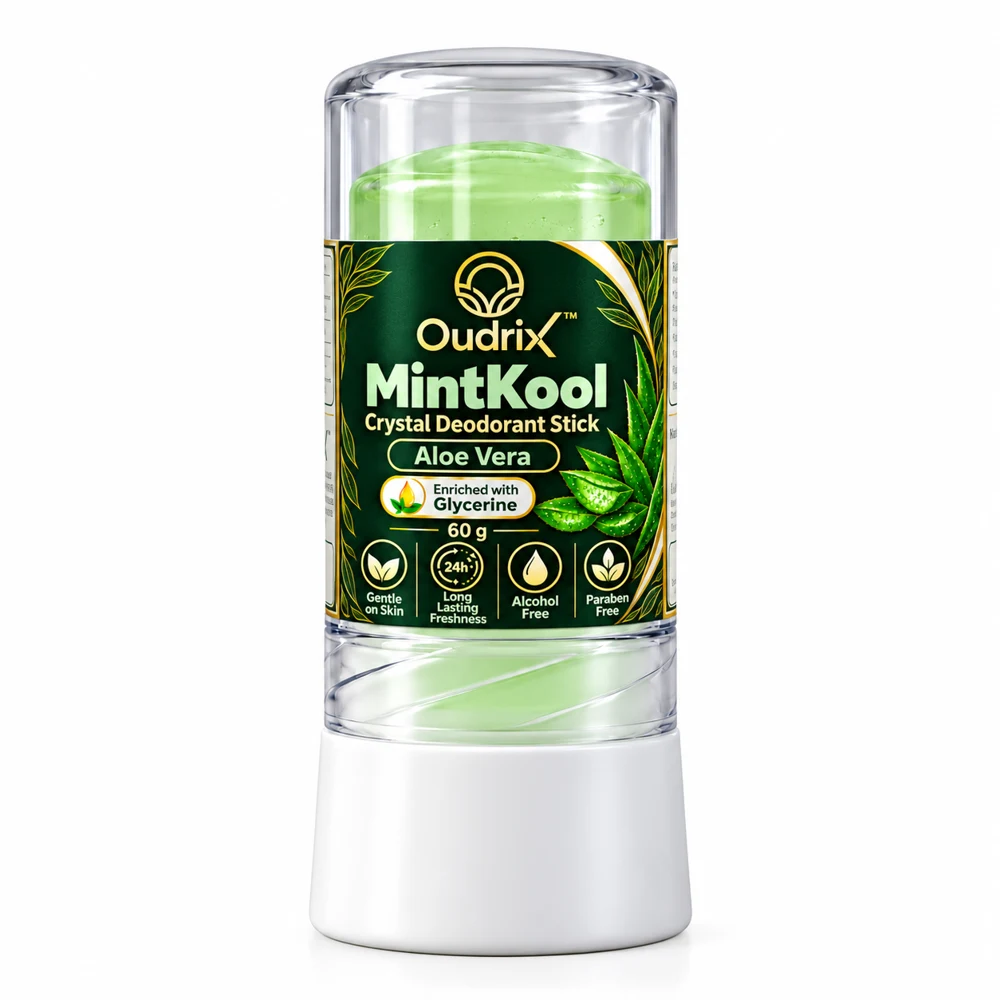
How do you patch test crystal deodorant? First read the exact product label and use a small, intact test area only if the directions allow it. Follow the product's normal method and watch the area over several days before regular underarm use. Stop if redness, itching, swelling, burning or another unexpected reaction appears. A home use check can reveal an obvious reaction, but it cannot prove that a deodorant is allergy-free or replace medical patch testing.
Read the pack before testing the product
Start with the complete ingredient list, intended body area, directions, warnings, batch details and date information on the physical pack. The FDA advises cosmetic users to read the label, follow directions and heed warnings. It also says that words such as “natural” do not establish safety and that “hypoallergenic” should not be treated as a guarantee against allergic reactions.
The current Oudrix source identifies MintKool Aloe Vera Crystal Deodorant Stick as a 60 g solid underarm deodorant. That confirms its format, net content and intended area in the catalogue. It does not confirm sensitive-skin suitability, dermatological testing, an allergy-free formula or a benefit from the words Aloe Vera. Check the final pack rather than filling those gaps from a variant name.
If your pack has incomplete or unreadable directions, do not invent a test routine from another crystal brand. Contact Oudrix support with photographs of the front, back, batch and date details. The deodorant label guide explains what to check before use.
Use a small-area check without changing the formula
The American Academy of Dermatology recommends testing a new skin-care product on a quarter-sized area where it will not be rubbed or washed away, using the normal amount twice daily for seven to ten days. Its examples include the underside of the arm or the bend of the elbow. If the exact product label gives different testing instructions, follow the label or seek individual professional advice.
For a water-activated solid, add water only when the MintKool pack says water activation is required. Do not dissolve, scrape, melt or mix the crystal with lotion, perfume, acids, powder or another deodorant to create a test sample. A modified mixture would no longer represent normal use and could make a reaction difficult to interpret. Wash your hands first and keep the stick clean and dry according to its directions.
Do not test on cuts, a fresh shaving nick, an existing rash, infected skin or an area that is already burning. The after-shaving guide explains why intact, comfortable skin and the exact product directions matter more than a universal waiting-time claim.
Know what a home check can and cannot tell you
If the small area remains comfortable, that is useful personal information, but it is not proof that a later reaction is impossible. It also does not establish that every MintKool variant will behave the same way. Natural, Turmeric, Rose, Charcoal and Aloe Vera are product identities; they do not confirm identical ingredients, fragrance, skin benefits or suitability. Compare the current listings in the crystal deodorant collection and read each final pack separately.
A home small-area use check is also different from diagnostic patch testing. The NHS explains that medical patch testing applies known allergens to the skin and assesses the sites at scheduled times to investigate allergic contact dermatitis. That process is selected and interpreted by healthcare professionals. Do not use a clear home test to diagnose an allergy, and do not copy a clinical patch-test timetable onto a cosmetic routine.
Stop and record useful details if a reaction appears
If you notice redness, itching, swelling, burning, a rash or another unexpected reaction, stop using the product and gently wash it off. The FDA advises stopping a cosmetic after an unexpected reaction and contacting a healthcare provider about care. Keep the stick, carton and purchase details instead of throwing away the evidence immediately. Photograph the affected area and the product label, and record when you applied it and when symptoms began.
Seek medical advice when symptoms are severe, persistent, recurrent or difficult to explain. A clinician may ask about other products used on the same area, including soap, shaving products, perfume, laundry products and another deodorant. Introducing only one new underarm product at a time makes that history easier to review.
Frequently asked questions
## Does a clear patch test prove crystal deodorant is safe for me? No. It may reduce uncertainty about an obvious short-term reaction on the test area, but it cannot guarantee future suitability or rule out every allergy or irritation.
Can I test the crystal directly on my underarm?
Use only the area and method permitted by the exact label or advised by a qualified professional. Do not apply to broken, freshly irritated or already inflamed skin.
Is MintKool hypoallergenic?
The current Oudrix source does not contain a verified hypoallergenic or sensitive-skin claim, so this guide does not add one. Read the final ingredients and warnings on your pack.
Is home patch testing the same as a dermatologist's patch test?
No. A dermatologist-led patch test is a diagnostic procedure involving selected allergens and scheduled readings. A home small-area use check is only a cautious way to observe whether an obvious reaction appears during normal product use.
Find your own fragrance story
Explore fragrance families and discover a profile you enjoy.
Find your scent → Explore fragrances